
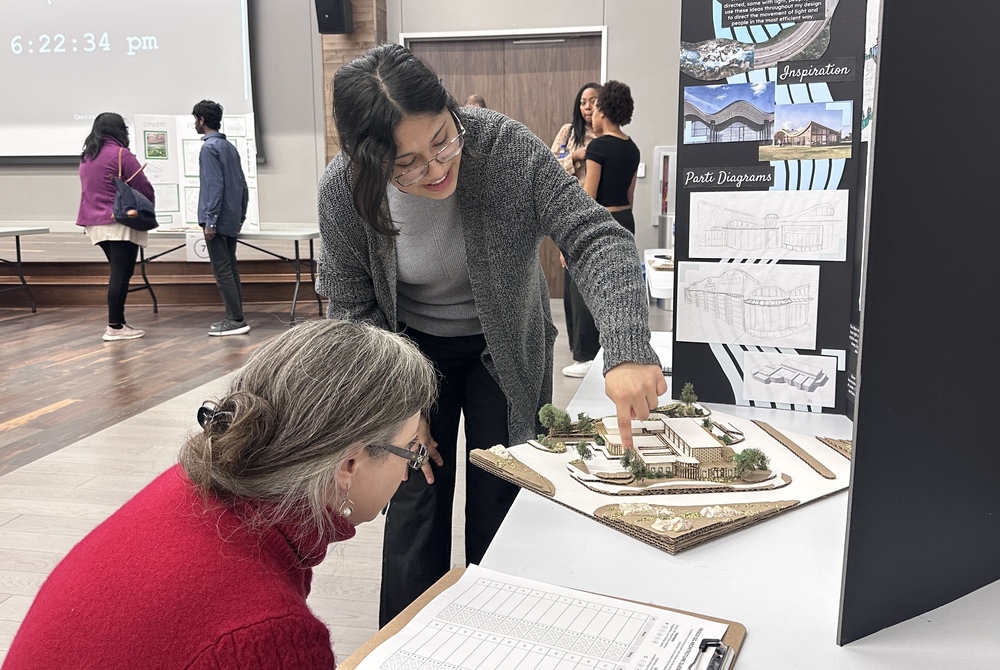
Frisco ISD architecture students are designing their future careers, thanks to a pathway tailored to their interests.
This spring, third-year students in FISD’s Architecture Pathway drew on everything they’ve learned to present their final project. Tasked with designing an innovative yet functional fire station, students shared their plans in March with over 30 design and fire professionals at The Grove at Frisco Commons.
For students, it was a chance to receive insight and critique from people in the careers they may want to pursue. For educators, it was an evening to show families everything their students have learned in the Career and Technical Education Center’s Architecture Pathway.
Students impressed the industry experts, who appreciated the level of detail in the presentations and the thoughtfulness of the designs. Some students were even offered internships based on their presentations.
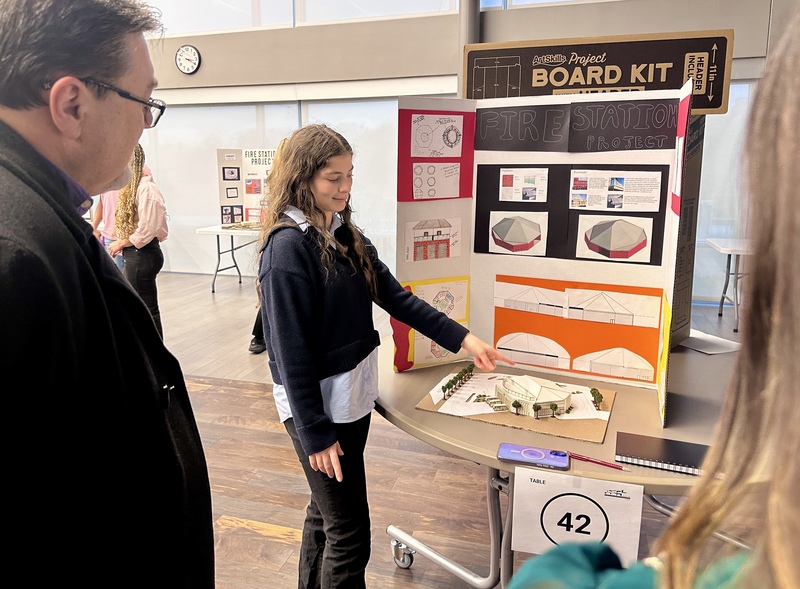
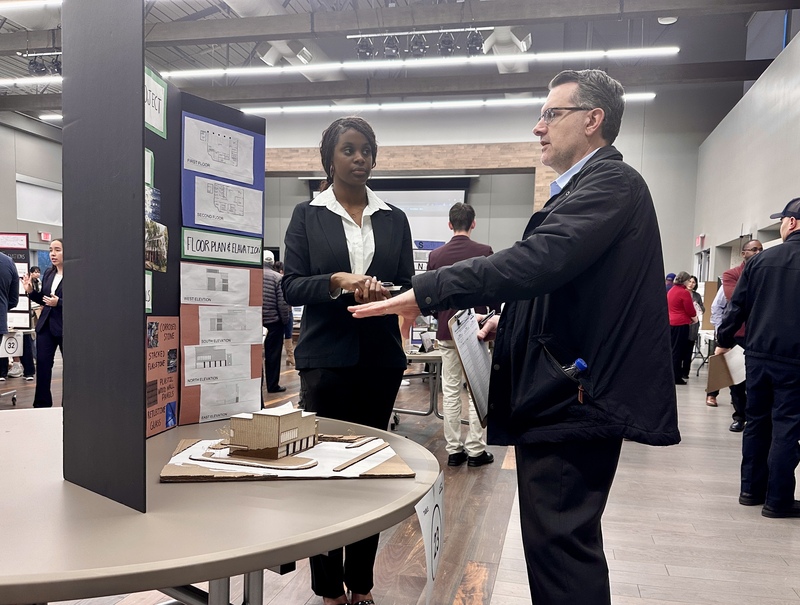
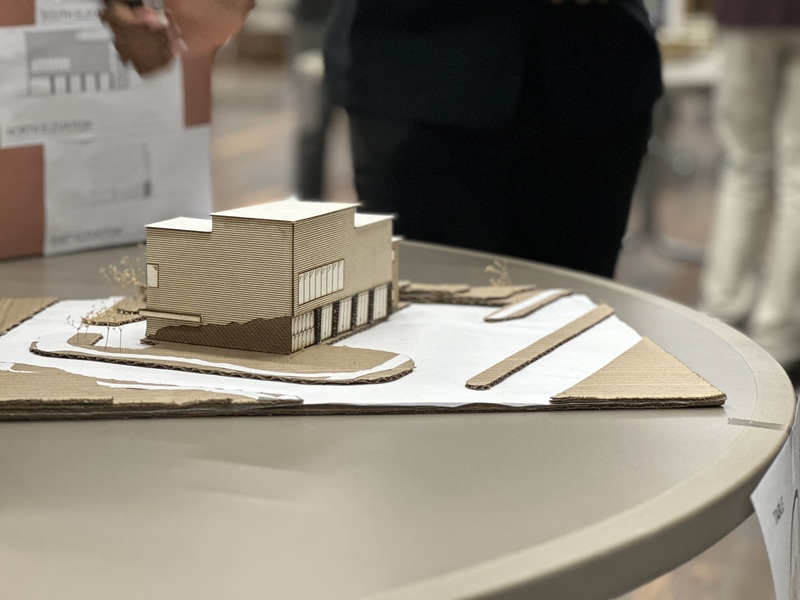
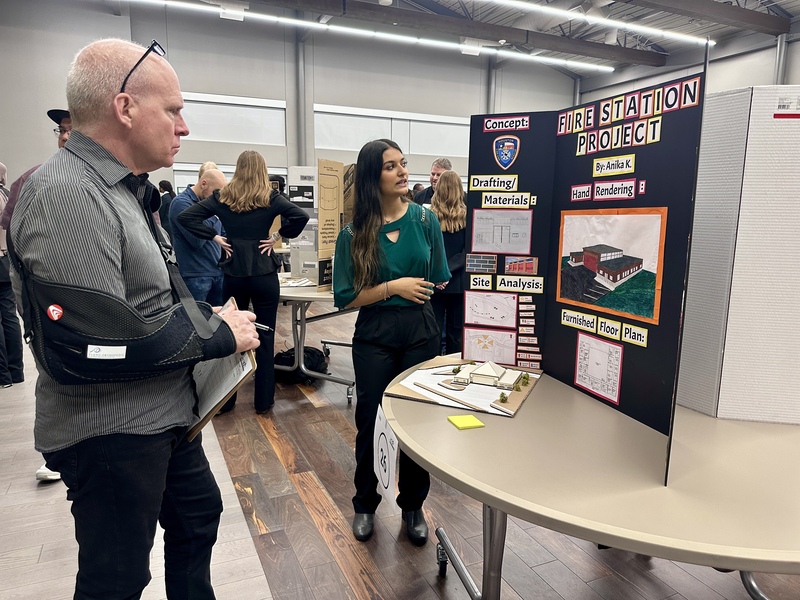
At one table, a student shared her designs with Carol Kesler of BRW Architects, who praised her strong instincts and ideas before giving more detailed feedback. At another, a student described their building materials — including concrete textured to look like wood — to a Frisco Fire professional. An engineering professional said he’s been a mentor to several of these students, and was happy to take part in building their presentation skills.
“The pathway encourages leadership, teamwork and communication, all essential qualities in the design industry,” architecture teacher Clarzell Gilleylen said. “An opportunity like this, to receive feedback from working professionals, is invaluable for their development. Our goal is to always provide meaningful experiences for students pursuing design both scholastically and professionally.”
In fact, some of those students may be the experts one day, with many planning careers in architecture after college.
That’s what Reedy High School junior Arina Gomzin wants to do — a path she started down at the CTE Center.
“I originally took architecture because of my interest in arts and crafts and model making,” Arina said. “I was not sure what career I wanted to pursue before high school, but these three years of classes have inspired me to do architecture in the future.”
Junny Lee, a Wakeland High School junior also planning a future in architecture, said the CTE classes have expanded her skillset and helped her beyond the classwork.
“They’ve allowed me to bring my artistic skills into a new space, which has not only deepened my passion but also helped me become more social and engaged,” Junny said. “Working alongside others with creative minds like mine has made me enjoy collaboration even more, and it’s pushed me to take on leadership roles in group projects.”
These are just a few of the students impacted by their time in CTEC architecture classes. There are more who won’t go into architecture at all, but use the skills and lessons learned in these classes to excel on another path.
“We are instilling that love of the field,” said architecture teacher Rocio Martinez. “This pathway allows them to explore what they want, and if they don’t pursue architecture, at least develop creative talents they can use in another career.”
About the Architecture Pathway
Students can take up to four years of high school courses through the comprehensive Architecture Pathway, culminating in a hands-on internship year.
Architecture I: Introduction to basic principles of design process, and various career opportunities in the building industry like interior design and engineering.
Architecture II:. Learn how to incorporate modern and historical characteristics of design while exploring technical aspects of architecture, space diagramming, floor planning, and intermediate physical and 3D modeling.
Architecture III: Application of contemporary design theory and introduction to a studio environment. Professional and peer critiques are essential at this stage. They also explore advanced modeling and digital rendering, as well as intricate hand-crafted models using laser-cutting technology.
Architecture IV: Architectural design with an emphasis on professional practice. Students work with an architecture firm as they facilitate a project for students. Then students take their professional experience on site as they work at an internship partner’s place of business. Students also have an opportunity to lead their own design project based on their own interests and experience.
“This program offers students a unique, skill-building experience that prepares them for both higher education and professional careers in architecture,” Gilleylen said. “Understanding the tangible variable of design helps to make the process real for our students.”
Learn more
- Rachel McReynolds