
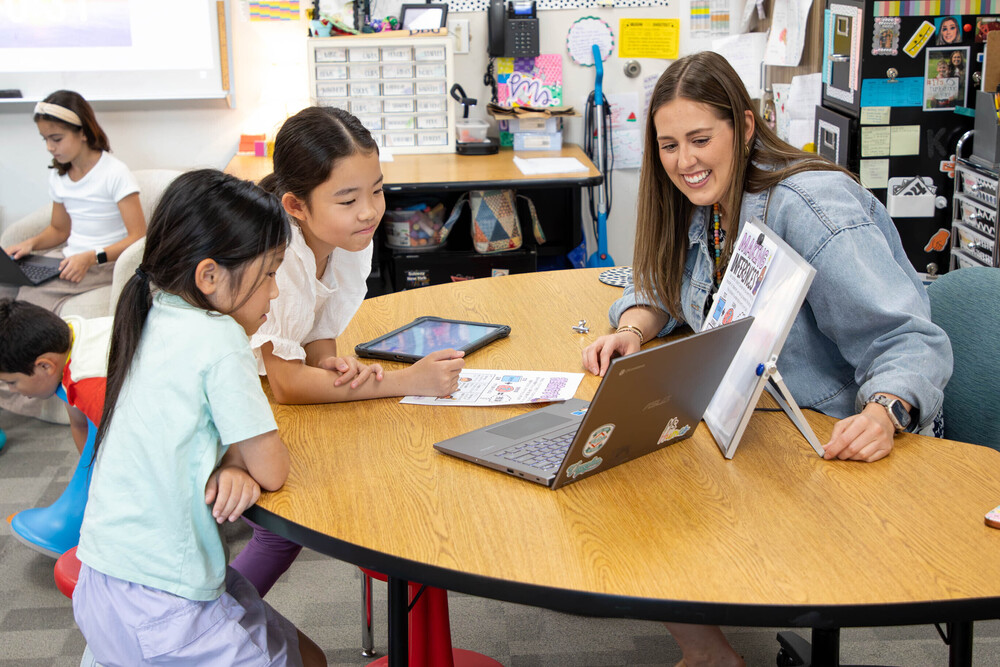
Just as the school year began, Frisco ISD’s emergent bilingual (EB) students took a big leap forward in their learning journey as 1,337 reclassified as English proficient.
To get there, students passed all four domains of the Texas English Language Proficiency Assessment System — listening, speaking, reading and writing — and earned at least “approaches grade level” on the STAAR, end-of-course or equivalent standardized test.
Reaching this milestone takes hard work from students and the support of the people helping them grow along the way.
In Frisco ISD, that support comes from a team that includes campus language coaches, English as a second language leaders, classroom teachers, District emergent bilingual coordinators and families, all working together to help students succeed.
Students in prekindergarten through 12th grade receive EB services through Frisco ISD. By the numbers:
7,700 - EB students in Frisco ISD, or 13% of the District
540 - Dual-language students, served at Christie and Carroll elementary schools
7,160 - English as a second language students, at every campus
5,800 - Former EB (or monitored) students in Frisco ISD who have already reclassified as English proficient
88 - Languages served in Frisco ISD. The top five non-English languages are Telugu, Spanish, Tamil, Hindi and Mandarin Chinese.
“Every student’s journey to English proficiency looks a little different,” said Lisa Morales, Frisco ISD ESL coordinator. “Our role is to understand where students are starting, identify the support they need and work alongside their teachers and families to help them grow.”
That work starts at enrollment.
When a family identifies a language other than English spoken at home, campus language coaches reach out to learn more, and students are tested for their language proficiency.
“Building that relationship with families early is so important. We want parents to understand the services available to their children and know that we’re partners in helping them feel confident, connected and successful at school,” Lisa said.
From placement to progress monitoring to celebrations, EB teams put the mission of Frisco ISD — to know every student by name and need — into practice. Meet a few of these teams below.
Vaughn Elementary LPAC Meetings
After assessment, a state-mandated Language Proficiency Assessment Committee places students into the appropriate EB program.
That committee can look different at each school — at Vaughn Elementary School, the work can be summed up in the call to action repeated at each meeting:
“I need your help,” says Soo Cho, Vaughn language coach, bending her elbow to touch her shoulder, then extending it to gesture at the group.
“You’ve got my help,” the committee answers, repeating the gesture.
Vaughn’s LPAC is a mix of campus leadership and parents, working together to identify needs, make placement decisions and celebrate progress.
“What Soo does here is very unique by having a committee of parents,” said Paula Polk, a District ESL facilitator who supports Vaughn. “This does not happen everywhere, where she involves so many parents from all backgrounds of the students.”
At the October meeting, the committee reviewed two students for placement, including one girl who finished pre-K in another country and began kindergarten with limited English. As she adjusted to her new classroom, she sometimes moved between her home language and English.
“She doesn’t know the person who she’s talking to does not understand what she’s saying. But in her mind, she’s thinking, ‘Why aren’t you understanding?’ For now she’s going back and forth, and she’s having a good ol’ time,” Soo said with a laugh.
After placements were determined and signed off on, Soo led the group in a goal-setting activity and discussed the strong connection between student goal setting and academic achievement.
She also showed photos of their learning and student experience at Vaughn.
One boy from Brazil collected enough class “money” to buy a ticket to read to a younger class, where he met another boy from Brazil. A girl from Japan who arrived with no English is working on conversations and basic English. Another student, who loves the school’s spirit days, went all out for ‘80s day.
These moments reflect the progress Cho sees as she works with students and classroom teachers throughout the year. She provides support in classrooms, checks in on students and plans additional student meetings in December and January ahead of TELPAS.
The Vaughn LPAC also celebrates teachers who have newcomer students. One teacher asked Soo to come in and model what to say instead of “I don’t know.” A first-grade teacher incorporates hand gestures and sounds into math class, and a PE coach uses structured conversation within the gym.
The results are encouraging.
“We have newcomers blossoming,” Soo said.

Anderson ESL Team
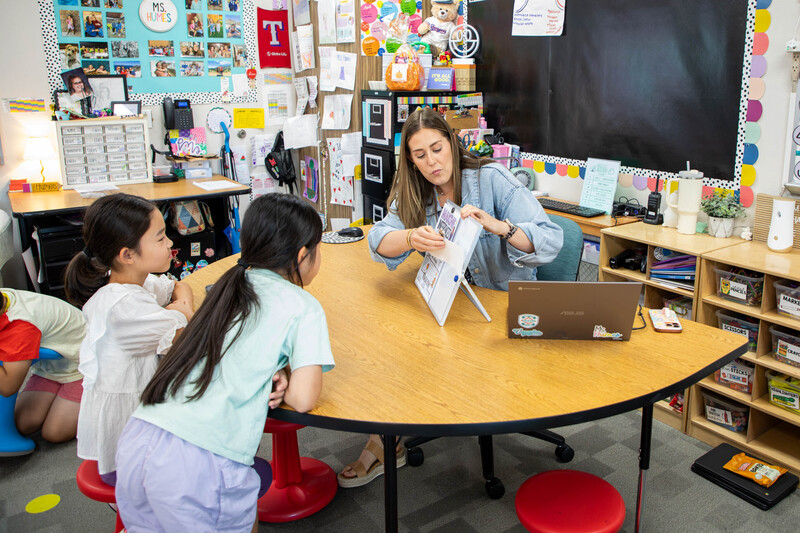
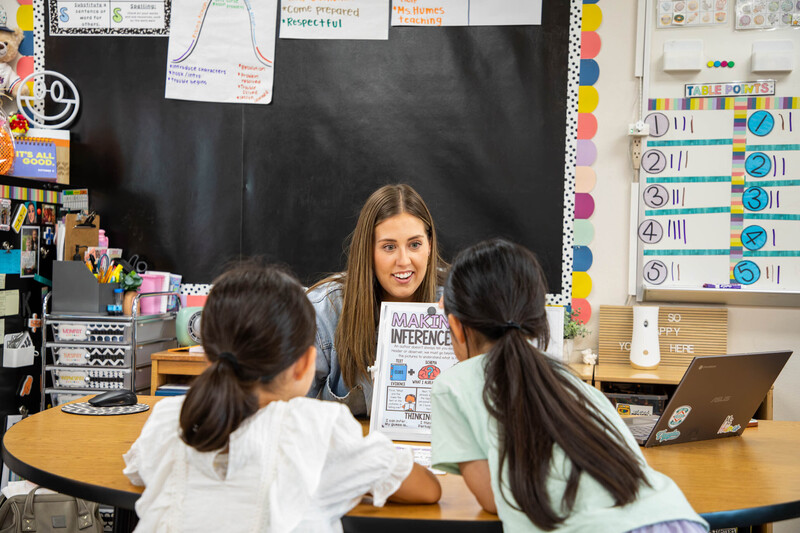
At Anderson Elementary School, supporting emergent bilingual students is a campuswide effort led by language coach Candice Bolding and language acquisition specialist Tanner Klein.
With more than 200 EB students, the school takes a layered approach to language development and family engagement. After students are placed in the appropriate program, Candice and Tanner work with classroom teachers during collaborative planning to develop language accommodations and instructional strategies. They also connect with parents to explain the program and help families prepare for TELPAS.
But the work being done to support EB learners is the same work being done for all Anderson students, principal Joanna McCord said.
“It’s not like we’re doing anything in the classroom that is different for them. We’re doing what’s best for all kids,” she said. “While this supports them on the TELPAS and supports their growth in English, it also helps all students be able to communicate well with one another.”
“What’s good for EB students is good for all students.” Joanna McCord, Anderson principal
Candice and Tanner say student celebrations are key to their work. At the beginning of the year, when students have been reclassified as English proficient, they’re celebrated with a party and at the Good Morning Anderson assembly.
“They were all fired up!” Candice said of the students. “We have students in all different categories of learning, and it’s important to celebrate little milestones and big milestones.”
For parents, who are also invited to these celebrations, it can be an important reminder their student isn’t alone.
“Parents being able to see that their child isn’t the only one who speaks another language in this school really puts them at ease and makes them feel supported,” Candice said.
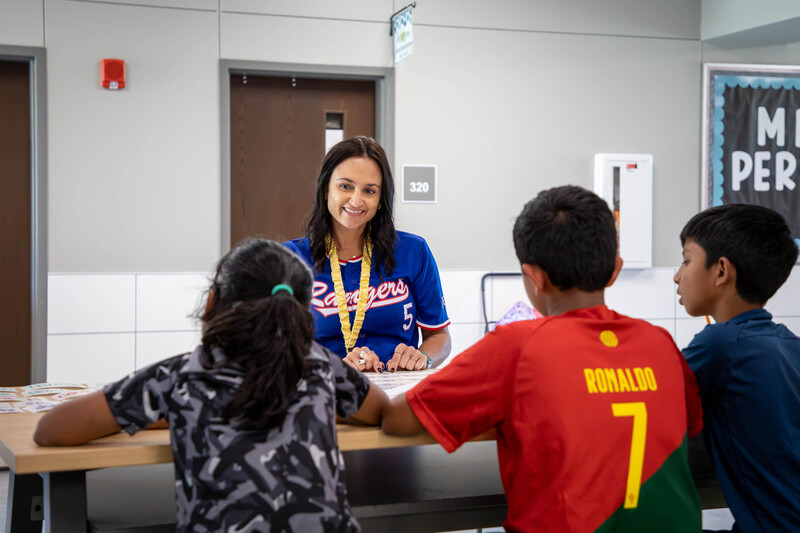
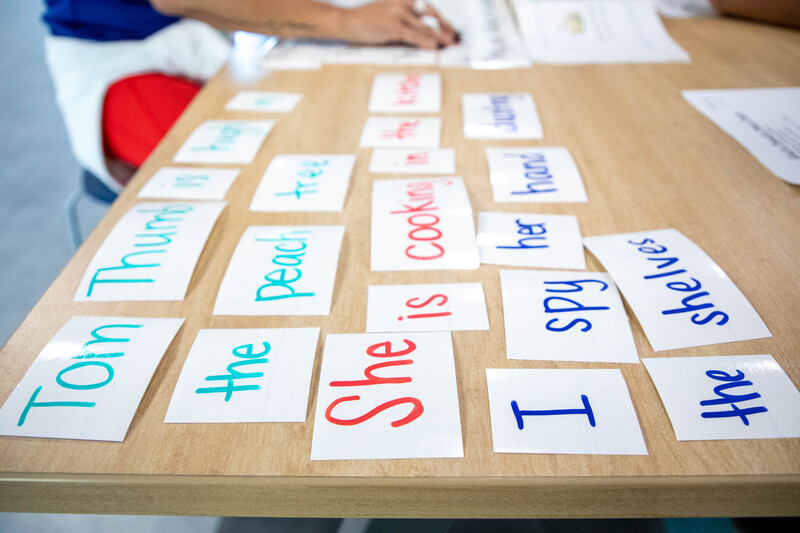
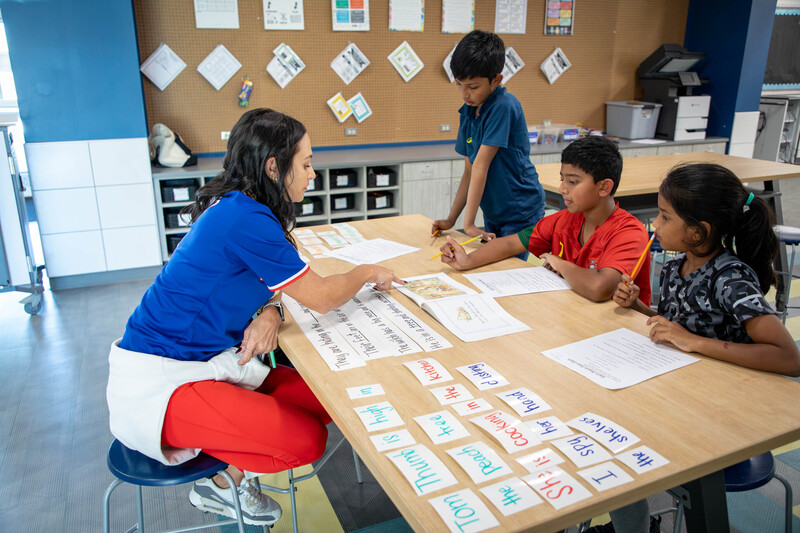
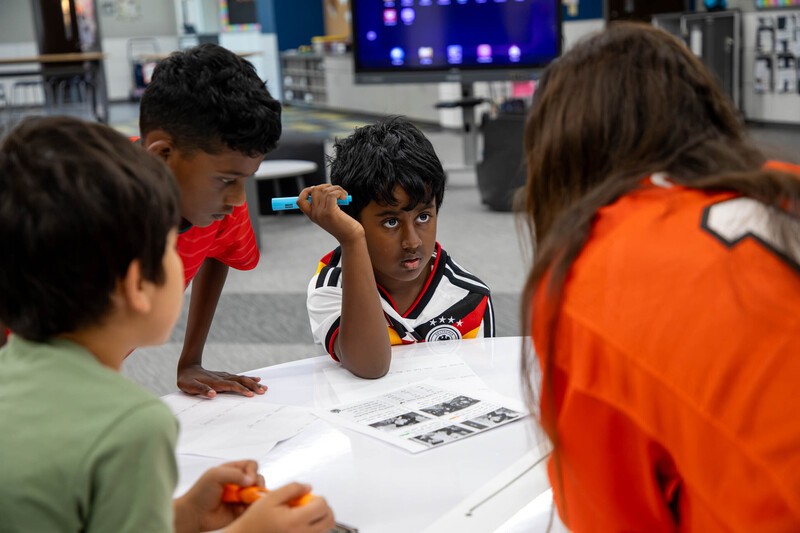
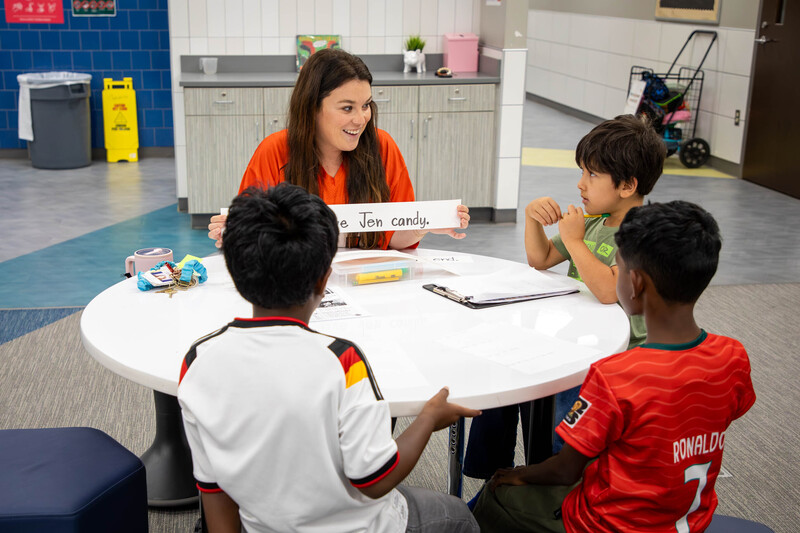
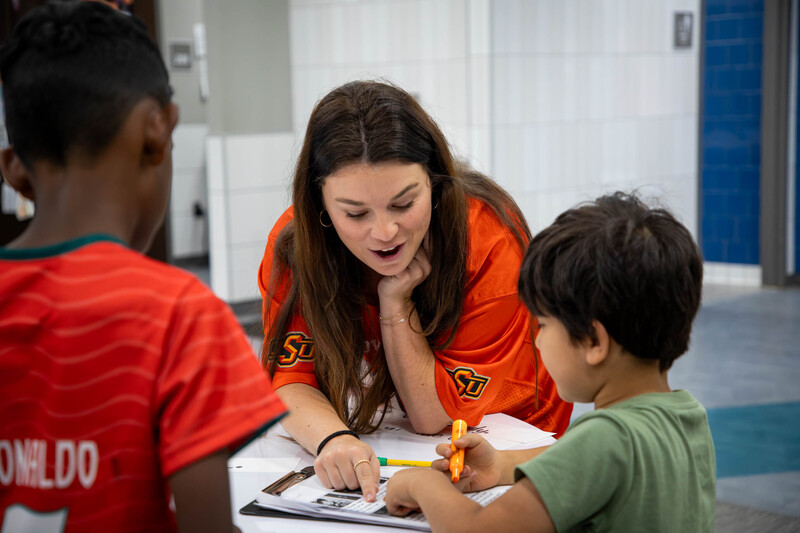
Behind those celebrations is a system for tracking progress and identifying what students need next. The team maintains a campuswide progress-monitoring document for each student, covering all four language domains.
“We go through and determine what kind of targeted instruction they can get,” Tanner said.
In mid-October, the pair had just met with second through fifth graders for goal setting related to TELPAS, compiling these goals in binders along with writing samples collected by teachers.
Students rate their confidence in listening, speaking, reading and writing, then choose one domain to focus on and identify steps they can take to improve.
“At the end of the year, after we meet with them three times, they’ll talk about how they feel now,” Tanner said.
For Candice and Tanner, the work is personal. Both started as substitutes at Anderson before starting down the path to becoming language coaches — and there’s nowhere else they’d rather be.
“When I was teaching kindergarten, I had two newcomer students who didn’t have any English, and they completely changed what I wanted to do in education,” Tanner said. “That definitely changed my trajectory, but I think one of the best things about it was the kids around them.”
She said children naturally find ways to connect, even when they do not share a language.
“Language is not a barrier for kids,” she said. “They will find ways to communicate: ‘I am going to support you; what can I do to help?’”
- Rachel McReynolds