
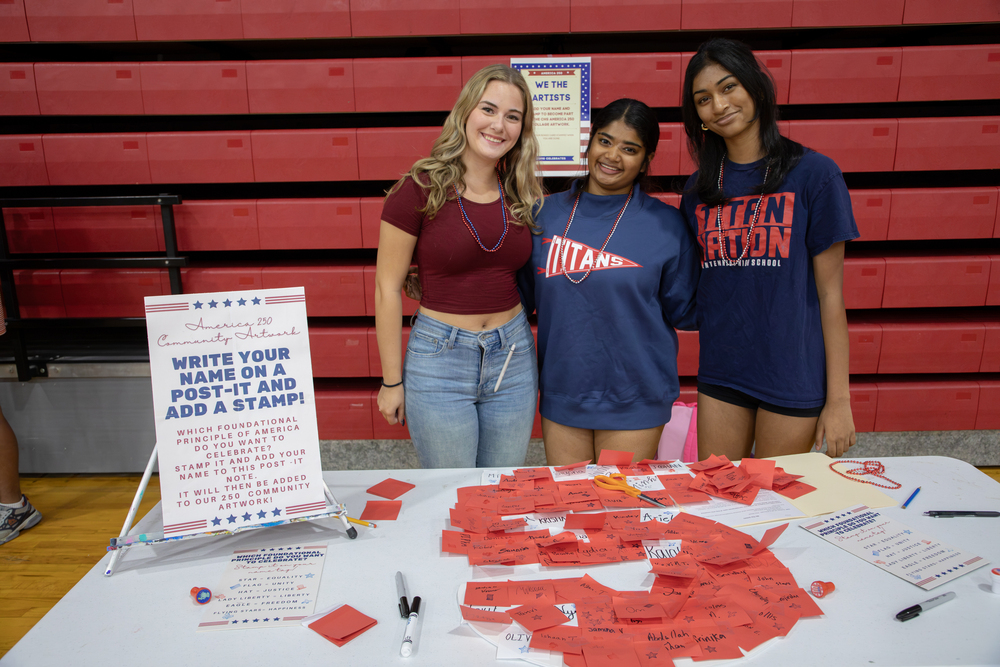
Frisco ISD students reflected on American ideals and principles during Celebrate Freedom Week, a time set aside each year in Texas to educate students on the founding of the United States.
This year’s celebration was especially poignant, as the U.S. turns 250 years old and students discovered how the country’s past and present are intertwined.
In Frisco ISD social studies classrooms, students were learning more about the colonists and their fight for independence, the writing of the Declaration of Independence and Bill of Rights, and the important historical figures and events that built the U.S.
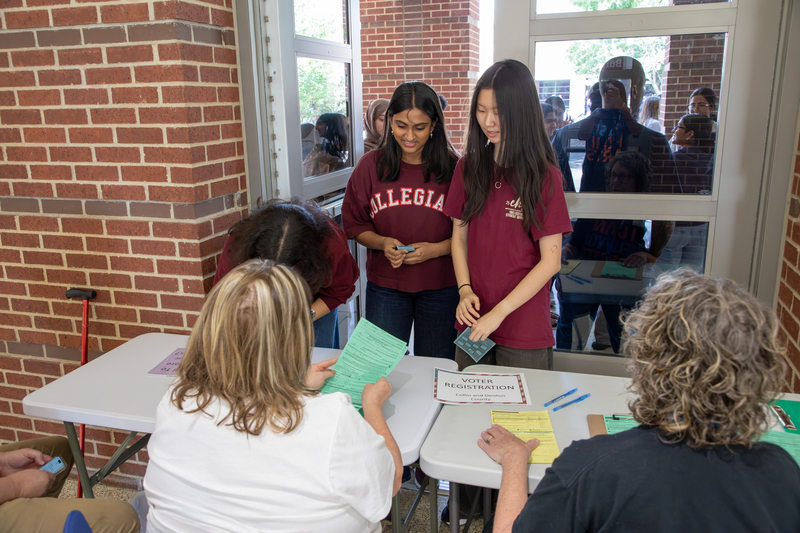
At high schools like Centennial, voter registration drives gave students an opportunity to enjoy the very rights they were learning about.
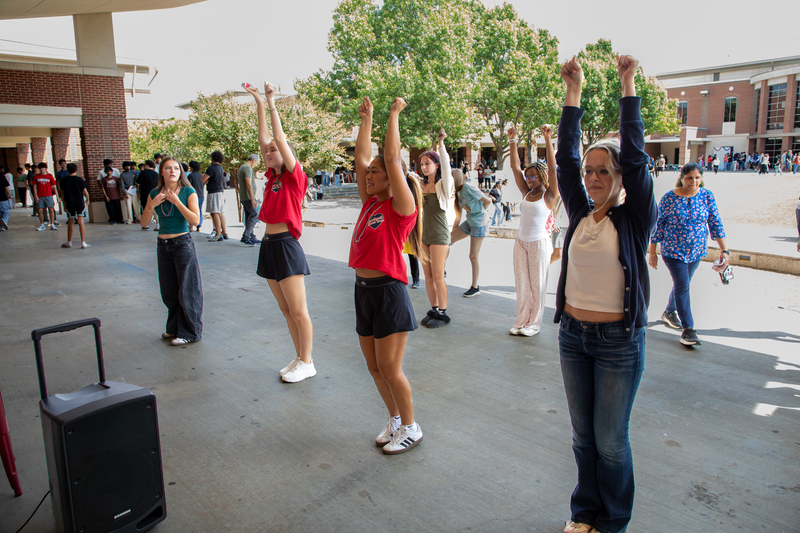
And Centennial didn’t stop there: The campus held a weeklong celebration of the 250th featuring special lesson plans, daily orchestra performances, lunchtime trivia, dress-up days and more. The week culminated in a Friday afternoon carnival-style celebration where student groups ran stations that included everything from Independence Concept Poetry to a President’s Ball Toss.
"Everyone pitched in; it was a real group effort," said Shannon Rosenfeld, Centennial social studies content lead. "I was excited to give students this opportunity to engage in the learning.”
One thing connecting all the Celebrate Freedom Week lessons: They were interactive and student-led, bringing long-ago history to life. Below, we’re highlighting a few.
Fowler stations
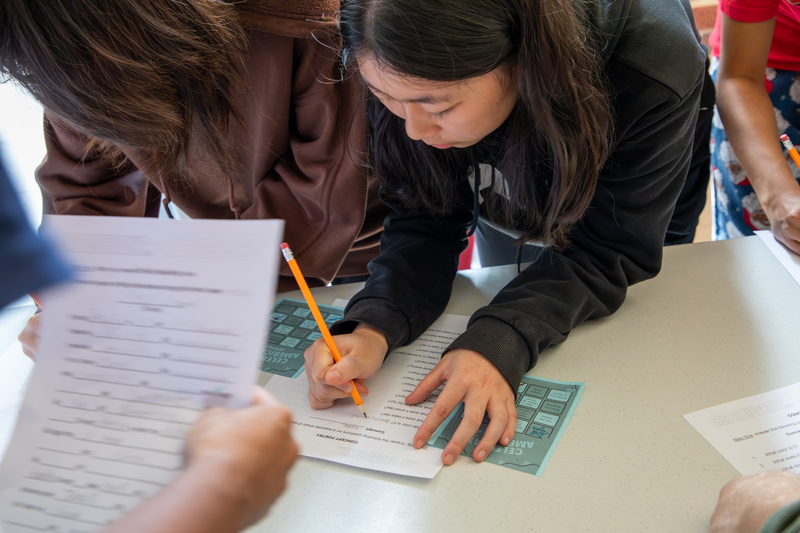
At Fowler Middle School, students explored America’s founding ideals through a series of hands-on stations designed to connect the nation’s history to their lives today.
“We want them to understand the importance of these documents and ideas, and how people played a role in enhancing these freedoms," social studies teacher Stephen Castoral said. “Hands-on activities help students take in as much as possible, and they leave more of a lasting impression.”
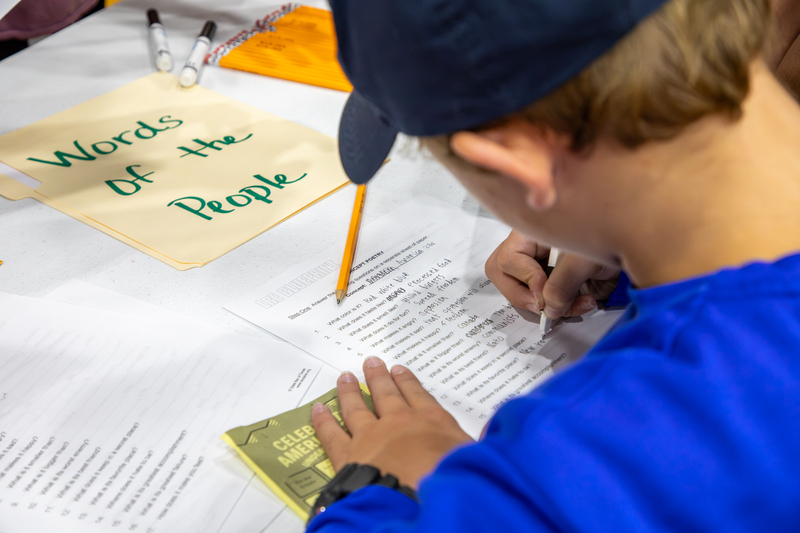
The activities challenged students to look at familiar historical documents and ideas from new perspectives. Students recited and then transcribed the Preamble to the Declaration of Independence into modern-day language. A Civic Progress Check asked them to review founders’ ideals and determine how they as middle schoolers could help achieve those ideals. There’s even a time capsule, which will contain messages to future students celebrating the nation’s tricentennial.
When writing those messages, students were asked to think about their hopes for future Americans.
“Accepting everyone and any differences they may have, and appreciating those differences,” one eighth grader said. “That everyone has an equal and fair chance to be successful,” said another.
“We often get the question, why do we study history? It’s important for students to make the connection between beliefs from 250 years ago and our lives today,” Stephen said. “They have a role to ensure these ideals continue and adapt to the world around them.”
Wester gallery walk
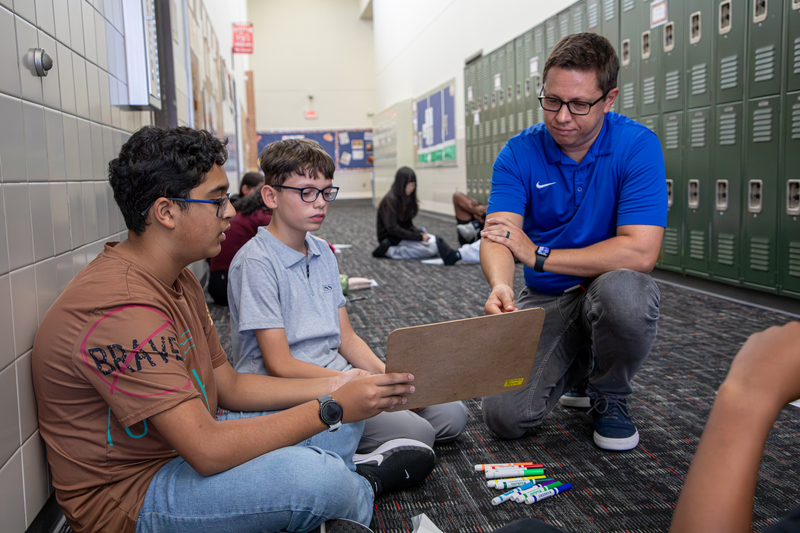
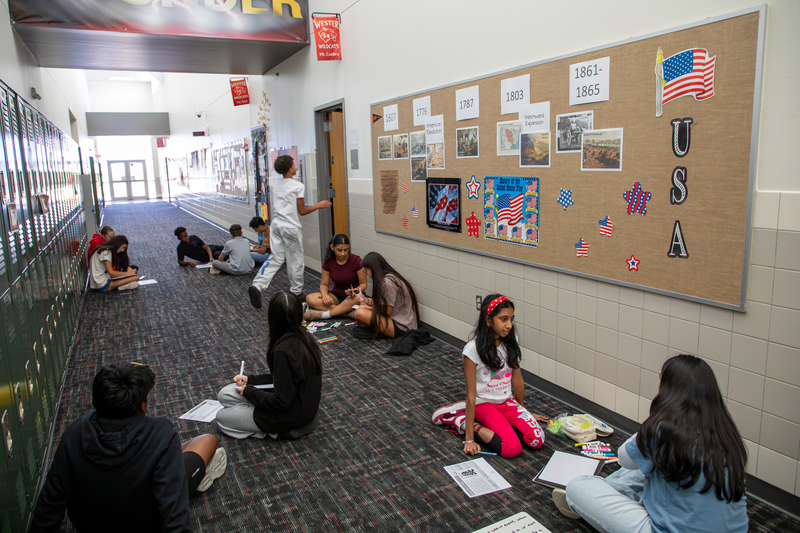
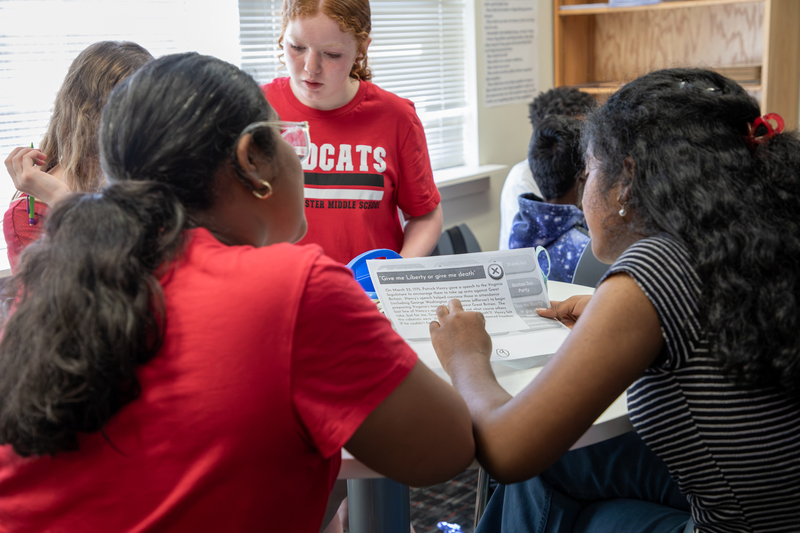
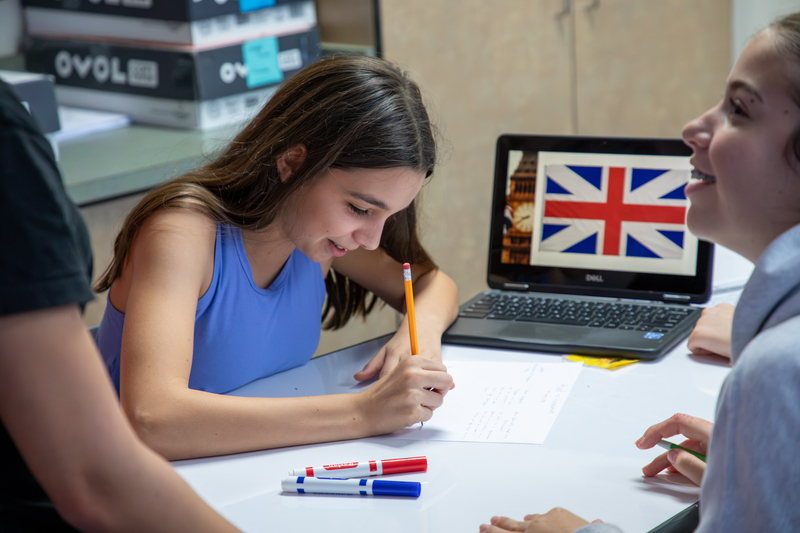
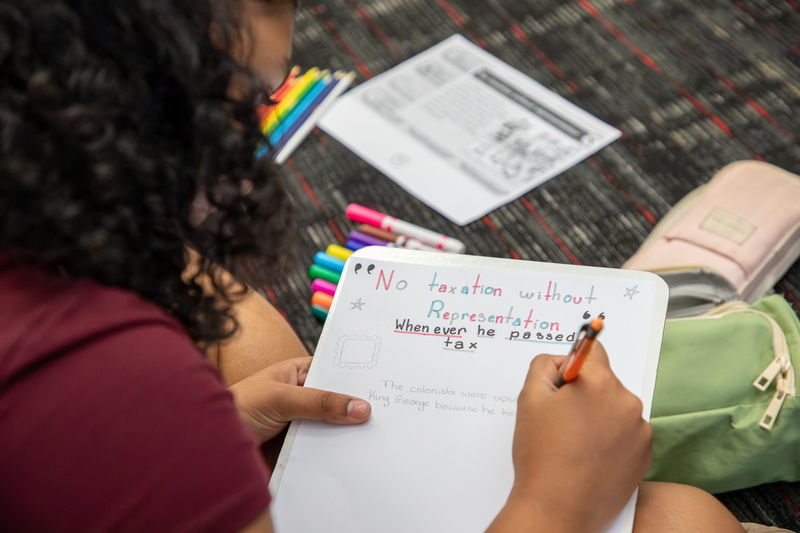
A lesson at Wester Middle School had students reflecting on colonists’ problems with England on the road to revolution.
In small groups, students took a specific historical event, put it in their own words and made an attention-grabbing poster for a gallery walk that would tell the whole story.
“It’s been really cool to see the connection they make between grievances the colonists had and the Bill of Rights,” social studies teacher Jeffrey Cambra said. “The oppression they felt, the pain they felt, and how they turned that into the protections we still have today — the students are processing those connections so well.”
Eighth graders, who are beginning to seek more independence themselves, found a natural kinship with the colonists.
“They’re finding out in history the struggle that colonists went through to protect what students have today,” Jeffrey said. “Colonists went up against the strongest army in the world, and it seemed like an impossible task. But because they were so committed to their independence, they learned sometimes it’s worth fighting for.”
That connection also helped students think beyond the history lesson and consider how change happens.
“They’ve been learning the most effective and legal ways to make change a reality,” Jeffrey said. “These are things that are important for everyone to know — even if you aren’t a lawyer or in a legal setting, understanding the rights protected in the Constitution really matters.”
Trent’s ‘Uncle Sam on the Street’
Trent Middle School’s broadcast class created “Uncle Sam on the Street,” interviewing students and staff about America’s founding.
Social studies teacher Samantha McVay worked with broadcast teacher Alexandra Mogenson to create a lesson that appealed to students, even those who don’t enjoy history as much.
“When students are involved, they’re more engaged. And they loved the ‘man on the street’ interview idea — it’s very popular on social media,” Samantha said. “Student-led activities are going to get everyone more on board.”
Students interviewed their peers and staff with questions like “What year was the Declaration of Independence signed?” “Who was the primary author?” “What are our unalienable rights?”
While Samantha wouldn’t spoil who got the most questions right between students and staff, she hopes students watching will recognize that these are the kinds of essential questions and information that stick with you long after middle school.
“These are essential topics and questions that you’ll remember your whole life,” she said.
Most of all, Samantha hopes Trent students learn something from the video — but also “smile and get excited about the 250th anniversary.”
Thanks to teachers like Mr. Castoral, Mr. Cambra and Ms. McVay, that excitement is a sure thing.
- Rachel McReynolds