

By the time state lawmakers passed a financial literacy graduation requirement in 2025, Frisco ISD had already been teaching such courses for years.
Key financial literacy concepts are being taught in Frisco ISD classrooms from K-12, by teachers like Panther Creek’s Amanda Lucero, who have spent their whole careers helping students connect classroom concepts to the realities they’ll soon face.
Now in her 13th year in education, Lucero said her approach centers on making lessons practical and personal.
“Financial education should be empowering and rooted in real-life scenarios,” Lucero said. “Students connect best when they can see themselves in the situations we’re discussing.”
That real-world focus is especially important, she said, because the financial choices students make early in adulthood — everything from student loans to their first full-time job — can have long-term consequences.
Students’ perspective
Lucero structures her classes around hands-on experiences, often using current events and interactive strategies to guide learning. Whether students are building budgets or analyzing financial aid options, the goal is to help them feel prepared, not overwhelmed.
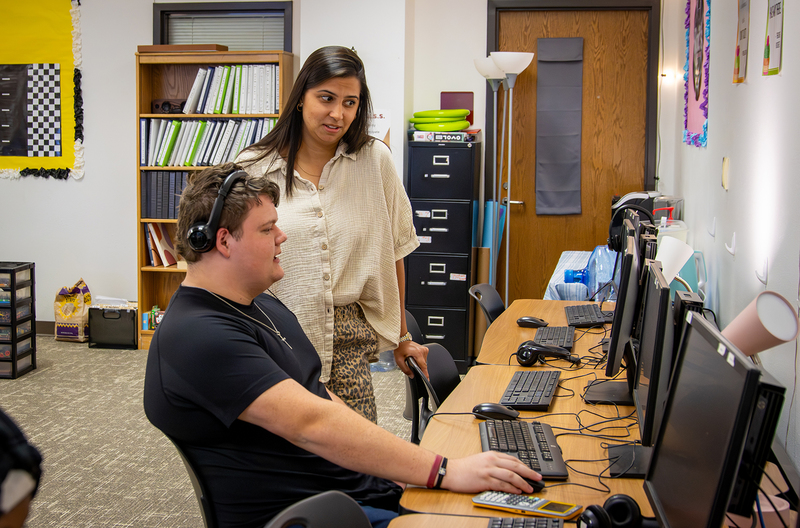
One person who isn’t overwhelmed? Heritage High School senior Alexander Veness.
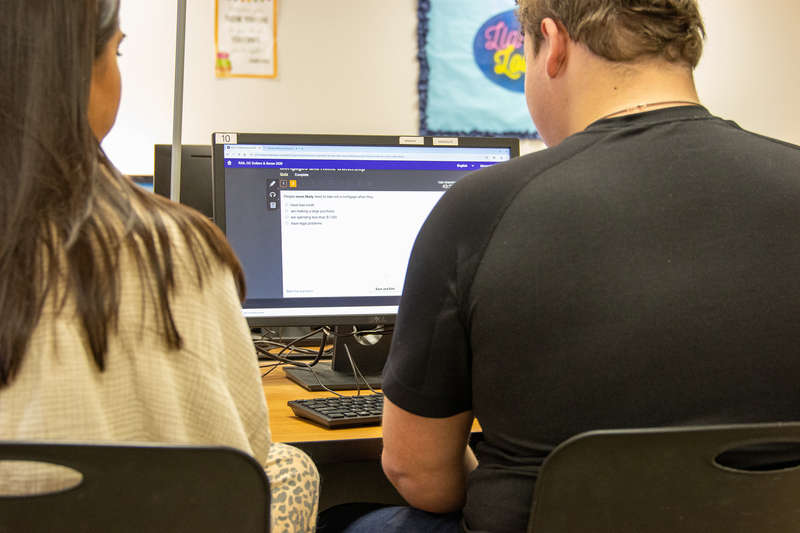
Alexander is enrolled in three financial literacy courses through the RAIL program: Dollars and Sense, Money Matters, and Survey of Business, Marketing and Finance. Through RAIL, students can take courses at their own pace from the RAIL Academy classroom on campus and access Frisco ISD teachers from across the District.
“Without exposure to quality, vetted financial literacy, students may feel overwhelmed or powerless when facing major financial decisions,. This is why this graduation requirement is going to be so valuable to the next generation.” - Amanda Lucero
“I have always been very curious about how to handle money and what's the best possible way to earn,” said Alexander, who is one of Lucero’s students through RAIL. “These classes have taught me how to budget money, understand taxes, what to look for and be careful about, and how to save money responsibly.”
Alexander’s financial literacy courses have become a conversation topic at home, too, inspiring questions about how his parents budget for needs and wants. In fact, budgeting is the most important lesson he’s learned through these courses.
“Budgeting can be so important,” he said. “It's also taught me how to be responsible with the money that is left over — in case of an emergency, you should always have something set aside.”
Panther Creek junior Claude Sanders, also taking a financial literacy class with Lucero, agrees.
“When we did the budget lesson, it was a game changer,” he said, adding that he supports the new graduation requirement.
Lessons that stick
Along with budgeting, Lucero said she’s seen some powerful a-ha moments when students calculate compound interest.
“Interest in investments brings on lots of smiles, questions about different types of investment accounts and curiosity about tax strategies,” she said. “Calculating compound interest on debts, however, is usually met with a lot of gasping, recalculations — ‘The calculator must be wrong!’ — and comments like, ‘That’s not fair’” or ‘How could they?!’ or ‘I need to win the lottery!’”
Lucero connects with the material both as a teacher and as the person she used to be, navigating financial realities.
“I’m really teaching the kid I once was, the one who wasn’t taught these skills and had to figure them out through trial and lots of errors,” she said. “I made a lot of unnecessary mistakes simply because I didn’t know any better. If I can help students avoid even a few of those pitfalls, that’s incredibly rewarding.”
What comes next
As financial systems evolve, Lucero said, future courses will need to address digital investing platforms, fraud prevention and the growing arena of non-accredited influencers. She also hopes predatory lending and its long-lasting impact on Americans can be part of a new course.
“Without exposure to quality, vetted financial literacy, students may feel overwhelmed or powerless when facing major financial decisions,” Lucero said. “This is why this graduation requirement is going to be so valuable to the next generation.”
Jeremiah Rush, secondary social studies coordinator, said curriculum writing on the required course will kick off once the state releases its guidelines. The first task will be unpacking the standards to understand the expectations, then creating district scope and sequence, and developing curriculum maps and exemplar lessons.
Incoming seniors don’t need to worry about taking a new course that’s still being discussed — next year’s ninth graders will likely be the first to take it, late in high school.
Until the course is ready, Frisco ISD will continue to offer five different economics classes, including dual credit and Advanced Placement, for graduation.
Rush said the new course is another way students will be able to dive deeper into such an important topic just before leaving FISD.
“With the number of economic decisions students face and will face, it is important to develop strategies for economic success early in life,” Rush said.
- Rachel McReynolds